What is Data Governance?
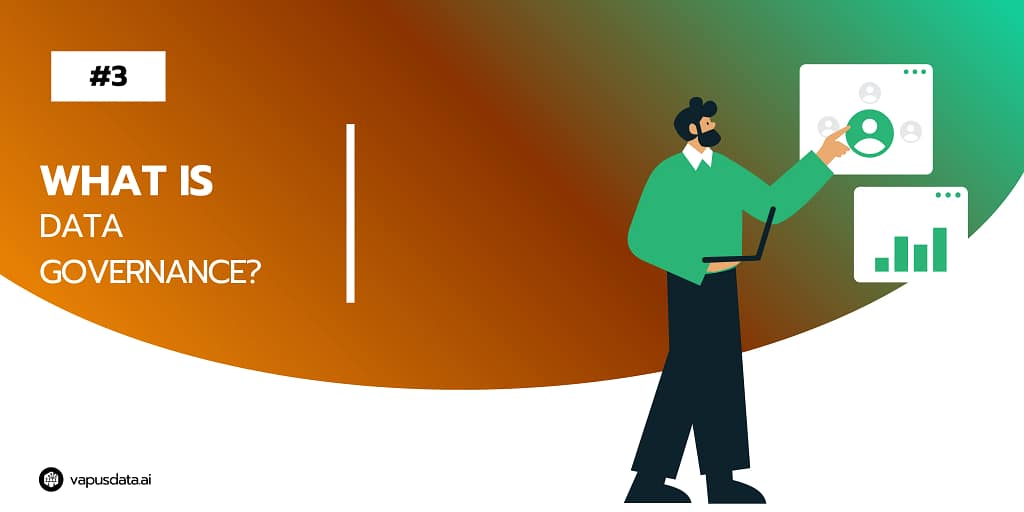
Data Governance is the framework of policies, roles, processes, and technologies that ensures data across an organization is accurate, secure, consistent, and usable. In simple terms, it’s the rulebook for how data is managed, who owns it, and how it can be used.
Why does it matter? Because:
- Regulations like GDPR and CCPA demand strict control over personal data.
- Enterprises are moving to cloud and hybrid data platforms, which adds complexity.
- Poor data quality costs businesses billions in wasted resources and wrong decisions.
- Trust in data directly impacts adoption of analytics, AI, and advanced technologies.
Good data governance is the difference between data chaos and data clarity. This guide will walk you through its principles, frameworks, tools, best practices, and real-world applications — so you can build a strong foundation for your data strategy.
Core Principles of Data Governance
At its heart, data governance is built on a few timeless principles that guide how data should be managed and trusted across the organization. Think of them as the “traffic rules” for data — they don’t slow you down, they keep everyone safe and moving in the right direction.
1. Accountability
Every dataset needs an owner. Accountability ensures there’s always someone responsible for defining, protecting, and maintaining data quality. Without it, issues linger, and no one takes action.
2. Transparency
Stakeholders should know where data comes from, how it’s transformed, and how it’s used. Transparency builds trust!
3. Integrity & Accuracy
Data must remain accurate and consistent across systems. Inaccuracies in data like wrong customer addresses or incorrect financial records can derail business decisions in seconds.
4. Standardization
Consistent definitions, naming conventions, and rules prevent teams from interpreting the same data differently. Standardization ensures “customer” means the same thing in different departments across the organization.
5. Security & Privacy
Data governance embeds controls for compliance with regulations such as GDPR and CCPA, while also safeguarding sensitive data against breaches.
6. Stewardship
Dedicated data stewards act as caretakers, ensuring policies are followed and data is properly cataloged, classified, and maintained.
7. Change Management & Auditability
Data isn’t static. Principles of governance ensure that any updates — whether schema changes, new integrations, or retention policies — are traceable, reviewed, and properly communicated.
What are the benefits of Data Governance?
Data governance transforms data into a strategic asset. By employing a strong data governance strategy, companies can make the most of their data assets, obtain a competitive advantage, and gain the trust of their clients by guaranteeing strong data and privacy standards. Here’s how organizations benefit:
1. Better Decision-Making
When data is consistent, accurate, and trustworthy, leaders can make decisions with confidence. No more second-guessing whether sales figures or customer metrics are correct and can drive correct business decisions.
2. Regulatory Compliance & Risk Reduction
With regulations like GDPR, CCPA, and HIPAA, governance ensures sensitive data is protected and auditable. This reduces legal risks, avoids hefty fines, and builds customer trust.
3. Improved Data Quality
Governance enforces data standards and validation rules, cutting down duplicate, incomplete, or outdated records. Cleaner data means smoother operations and fewer costly mistakes.
4. Operational Efficiency
By clarifying roles and automating data governance processes, teams spend a lot less time fixing data issues and more time innovating.
5. Stronger Security & Privacy
Data Governance defines clear policies for who can access data and under what conditions. This protects intellectual property and safeguards sensitive customer information.
6. Enablement of Advanced Analytics & AI
AI, machine learning, and predictive analytics all rely on high-quality, well-governed data. Data Governance provides the foundation for scaling these advanced capabilities through accurate data.
7. Enhanced Business Agility
Well-governed data allows organizations to respond faster to market changes — whether it’s launching a new product, entering a new region, or adapting to new compliance rules.
Components of a Data Governance Framework
A data governance framework is the structure that turns principles into practice. Its core building blocks include:
- Roles & Responsibilities: Data owners, stewards, and governance councils ensure accountability.
- Policies & Standards: Rulebooks that define how data is collected, stored, shared, and retired.
- Data Quality & Metadata: Processes and catalogs that keep data accurate, consistent, and discoverable.
- Data Lineage & Compliance: Traceability, security, and privacy controls that protect data and meet regulations like GDPR and CCPA.
- Lifecycle & Change Management: Guidelines for retention, deletion, and auditing so data stays reliable as systems evolve.
Key Elements of Data Governance
A strong data governance program is built on several key elements. These work together to ensure that data is properly managed, secure, and delivers business value.
1. Data Cataloging
A data catalog is like an organized library of all data assets in the organization. It helps users quickly find what data exists, where it’s stored, and how it can be used. Modern catalogs often include metadata, lineage, and quality indicators, making them central to self-service analytics and compliance.
2. Data Classification
Not all data is equal. Data classification groups data based on its sensitivity and business importance — such as public, internal, confidential, or highly restricted. This ensures that critical assets like customer financial details or health records receive the highest level of protection. Classification also supports compliance with regulations like GDPR and HIPAA.
3. Auditing Data Entitlements & Access
Governance requires clear control over who can access what data. Entitlement auditing means regularly checking user permissions to ensure only authorized people have access to sensitive datasets. This reduces risks of data misuse, insider threats, and non-compliance.
4. Data Discovery
Organizations often have data spread across multiple platforms, clouds, and systems. Data discovery tools allow users to locate relevant datasets quickly, without manually searching across silos. Combined with cataloging, it makes data more accessible and usable for business and analytics.
5. Data Sharing & Collaboration
Data is most valuable when shared responsibly. Governance establishes secure ways for departments and teams to collaborate on data without breaching compliance or security policies. Controlled sharing increases business agility while protecting sensitive assets.
6. Data Lineage
Data lineage traces the full journey of data — from its source to its current state — including all transformations along the way. This transparency helps teams trust data, resolve issues faster, and prove compliance during audits. For example, knowing how a customer address was transformed before reaching a CRM ensures accuracy and accountability.
7. Data Security
Data security is at the core of governance. It involves implementing encryption, masking, anonymization, and access controls to safeguard data. Security ensures that sensitive information like personal identifiers or financial transactions remains protected from breaches and misuse.
8. Data Quality
Even the most secure data is useless if it’s incorrect or incomplete. Data quality management ensures information is accurate, consistent, and reliable. This includes eliminating duplicates, filling in missing values, and validating entries. High-quality data leads to better decision-making and improved business outcomes.
Data Governance through AI
As organizations generate more data than ever before, traditional governance models are reaching their limits. Manual policy enforcement, static access controls, and checklist-driven compliance can no longer keep pace with the volume, velocity, and variety of modern data. This is where Artificial Intelligence (AI) can transform data governance — and shift it from reactive oversight to automated, intelligent, and predictive governance.
AI brings agility, speed, and intelligence to the governance process. Instead of relying on human intervention for every classification or access review, AI systems can learn patterns, detect anomalies, and optimize workflows in real time.
How AI Transforms Data Governance
- Automated Data Classification
AI can scan data across multiple systems and automatically tag sensitive information such as Personally Identifiable Information (PII), payment details, or healthcare records. This eliminates human error and ensures that sensitive data never goes unnoticed. - Continuous Data Quality Monitoring
Poor data quality can break analytics, compliance, and AI models themselves. With machine learning, governance frameworks can monitor data pipelines continuously, detecting issues like duplicates, missing values, or inconsistencies in real time — before they cause business disruptions. - Proactive Risk and Compliance Management
Instead of waiting for audits or breaches, AI enables predictive compliance. Algorithms can flag unusual access behaviors, highlight policy violations, and even simulate compliance scenarios (GDPR, HIPAA, CCPA) to identify potential gaps. - Automated Data Lineage Tracking
AI maps data flows from ingestion to consumption without manual tagging. This makes it easier to demonstrate compliance, resolve errors quickly, and provide stakeholders with a 360° view of data movement. - Natural Language Interfaces
Business users often find governance dashboards intimidating. AI introduces conversational interfaces, allowing teams to ask questions like “Who accessed customer data last week?” or “Is this dataset compliant with GDPR?” — and get instant answers. - Self-Learning Governance Systems
With reinforcement learning, governance systems improve over time. For example, if an AI engine repeatedly detects a specific kind of anomaly in ETL pipelines, it learns to flag similar issues earlier, reducing downtime and manual intervention.
Introducing VapusData
VapusData is not just a governance tool — it is an AI-powered Decentralized Data Operating System built to unify data, AI, and compliance all under one single platform.
Where traditional tools focus narrowly on cataloging or access management, VapusData embeds governance, observability, and automation into the very fabric of enterprise data operations.
Key Capabilities of Vapus Data that Redefine Data Governance
- Full-Stack Observability
Monitor data flows, infrastructure metrics, and query performance in real time. With built-in observability, organizations can identify bottlenecks, track usage patterns, and gain actionable insights — all while maintaining governance guardrails.
- Security & Compliance by Design
VapusData enforces strict access controls and compliance policies through a no-code framework, ensuring alignment with GDPR, HIPAA, CCPA, and other regulations. Unlike legacy systems that require heavy configuration, VapusData makes compliance seamless and automatic.
- Agentic DataOps
Self-learning AI agents streamline ETL and ELT workflows by automating routine tasks, detecting anomalies, and optimizing pipelines. This reduces manual effort, minimizes errors, and ensures data is always reliable and production-ready.
- Governed AI Studio
Deploy, manage, and govern open-source, SaaS, and self-hosted AI models within a single platform. VapusData ensures that even advanced AI workloads operate under strict governance and compliance rules — a challenge most traditional tools don’t address.
- Data Workers for Pipelines
Containerized, flexible, and scalable data workers power ETL and Change Data Capture (CDC) pipelines with built-in monitoring and compliance. This ensures pipelines are not only efficient but also secure and governed end-to-end.
- Decentralized Architecture
Move beyond centralized, siloed governance. VapusData’s decentralized design allows secure, governed collaboration across clouds, teams, and partners, making it ideal for enterprises managing data in hybrid or multi-cloud environments.
- Performance & Cost Advantage
By optimizing both AI and DataOps workloads, VapusData delivers up to 10x cost savings and enables 5x faster workflows compared to traditional governance solutions. This makes governance not just a compliance requirement but a true competitive advantage.
VapusData vs. Traditional Tools
| Feature / Capability | Collibra / Informatica / Alation | VapusData |
| Data Catalog & Lineage | Manual / Semi-automated | AI-driven, self-learning |
| Compliance Enforcement | Rule-based, manual configuration | No-code, automated across all environments |
| AI/ML Integration | Limited or add-on modules | Native AI Studio for model deployment & governance |
| DataOps Automation | Requires IT-heavy workflows | Agentic AI automates ETL, monitoring, optimization |
| Cost & Efficiency | High licensing & infra costs | 10x lower AI/ML cost, 60% faster DataOps |
| Architecture | Centralized, silo-prone | Decentralized, secure, and scalable |
Data governance is no longer a “nice to have” — it’s a strategic necessity. A well-designed data governance framework ensures accuracy, compliance, and security while enabling advanced analytics and AI. From improving decision-making to strengthening regulatory compliance and unlocking innovation, the benefits of data governance extend across every function of the business.
As data ecosystems become more complex, traditional governance approaches often fall short. This is where VapusData redefines what’s possible — automating policies, embedding compliance, and empowering organizations to harness data with trust and agility.
FAQs
Data governance is the set of rules, processes, and responsibilities that ensure data is accurate, secure, compliant, and used correctly across an organization. It defines who owns data, how it can be used, and how it is protected throughout its lifecycle.
2. Why is data governance important for modern enterprises?
Data governance is critical because organizations operate across cloud, AI, and analytics platforms. Without governance, businesses face data breaches, compliance fines, poor data quality, and failed AI initiatives. Strong governance turns data into a trusted, scalable asset.
3. What does a governed Agentic AI architecture actually look like?
A data governance framework typically includes:
• Defined roles (data owners, stewards)
• Policies and standards
• Data quality management
• Metadata and data catalogs
• Data lineage and auditability
• Security, privacy, and compliance control
4. What makes VapusData different from traditional data governance tools?
VapusData is an AI-powered decentralized data operating system, not just a data catalog. Unlike traditional tools that rely on manual rules and configurations, VapusData embeds governance, observability, automation, and compliance directly into DataOps and AI workflows, enabling real-time, self-learning governance at scale.
5. Is VapusData suitable for cloud and multi-cloud data governance?
Yes. VapusData is built for cloud-native, hybrid, and multi-cloud environments. Its decentralized architecture enables secure, governed collaboration across AWS, Azure, GCP, private clouds, and on-prem systems without central bottlenecks.
6. Does VapusData replace data catalogs like Collibra or Alation?
VapusData goes beyond traditional data catalogs. While it includes metadata management and lineage, it also adds:
1. AI-driven automation
2. Real-time observability
3. Governed AI and DataOps workflows
This makes it a modern alternative rather than a point replacement.
7. Can VapusData govern AI models and prompts?
Yes. Through its Governed AI Studio, VapusData manages:
1. Prompt engineering
2. Model deployment
3. Versioning and monitoring
4. Compliance and access control
This ensures AI systems remain safe, transparent, and compliant.